
I woke up this morning a little sore from my tumble yesterday — a gentle reminder that wet stone steps and I don’t always see eye to eye — but mostly I just felt grateful. Things could’ve been so much worse. Instead of waking up in a hospital room, I was waking up to another day of river cruising through France, with a couple of ibuprofen and a glass of Coke and two pots of English Breakfast Tea to start my day.
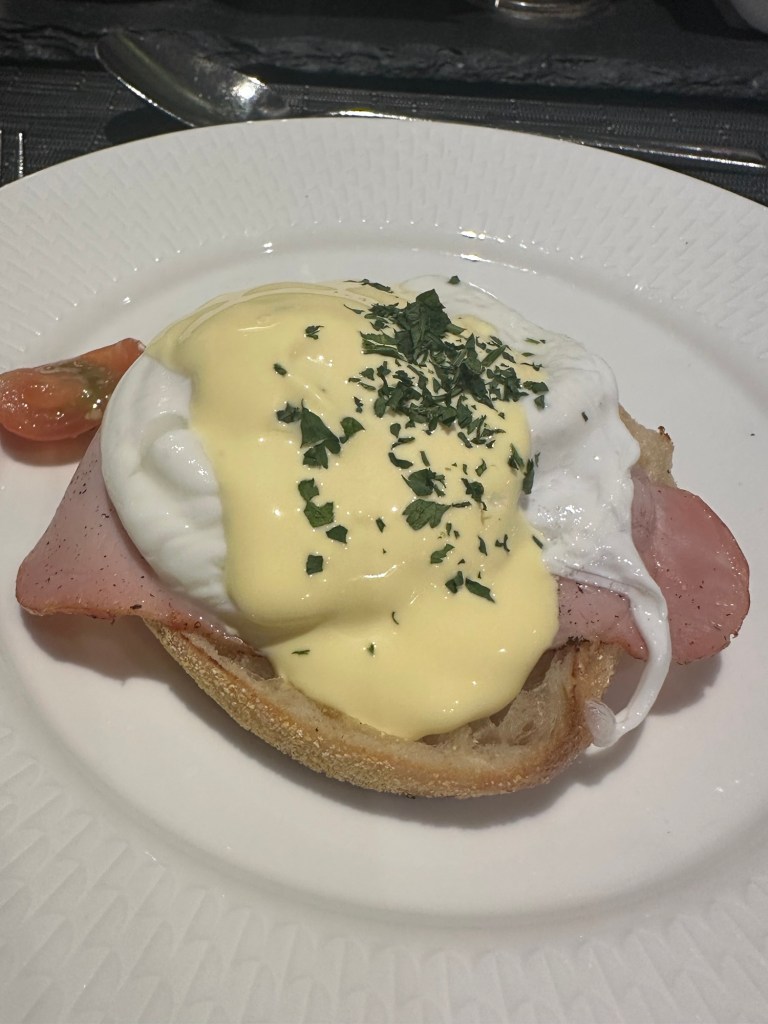
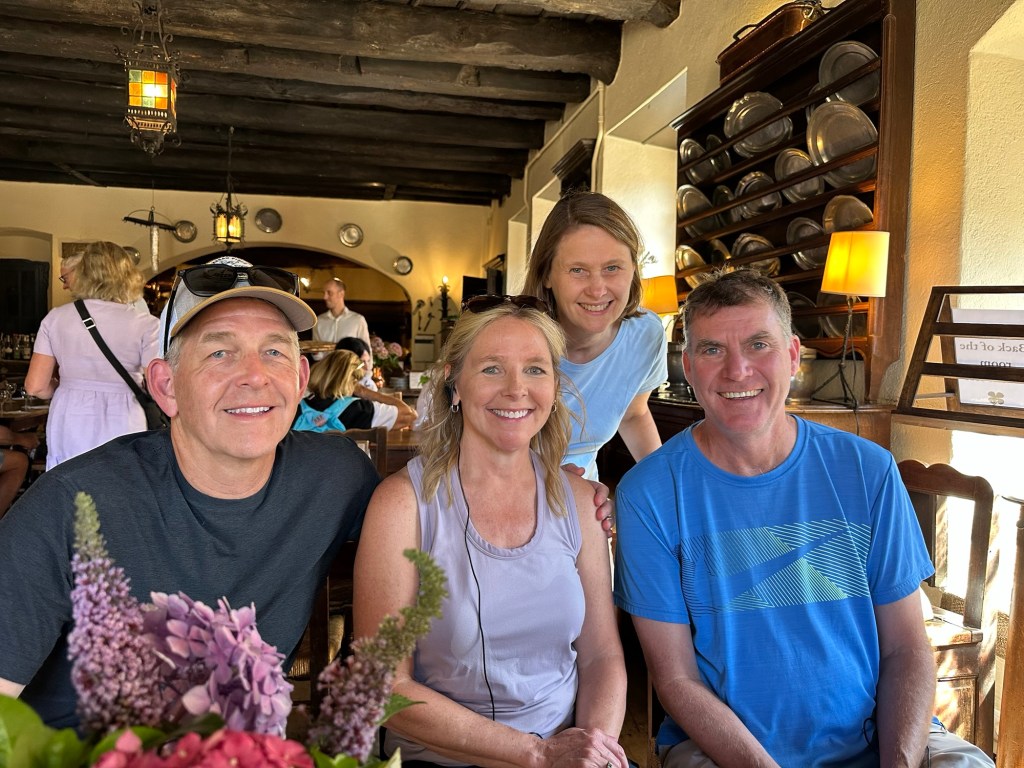
After another perfect eggs Benedict for breakfast (seriously, Avalon’s kitchen never misses), I joined today’s optional excursion: a trip to the medieval hilltop village of Pérouges.
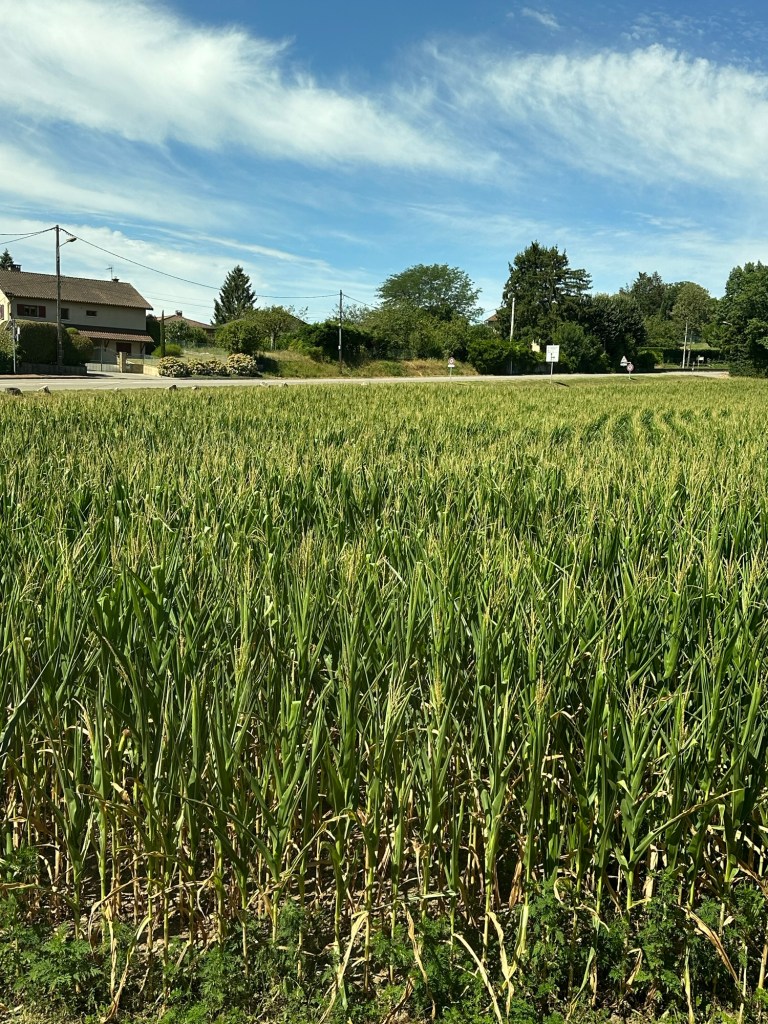
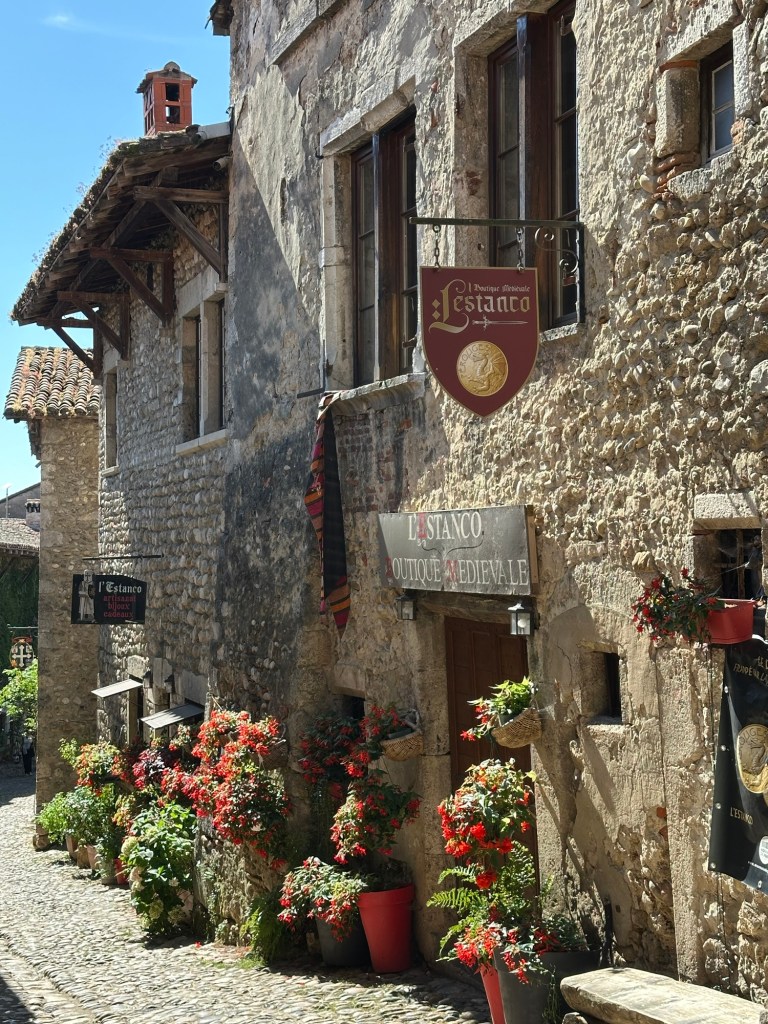
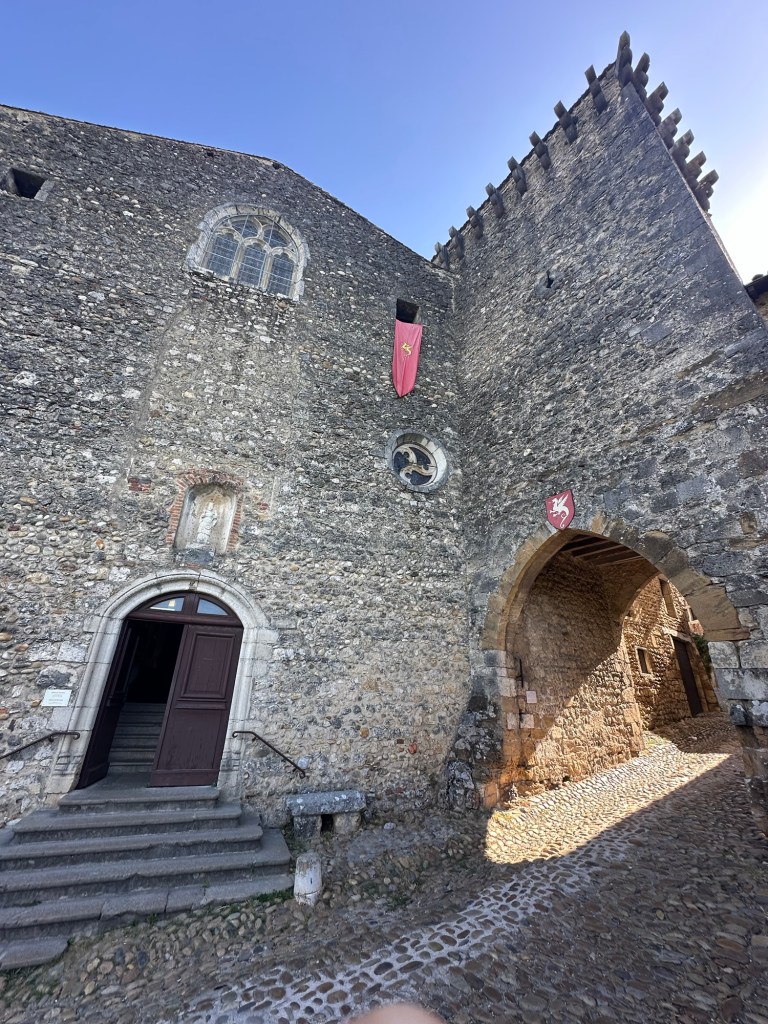
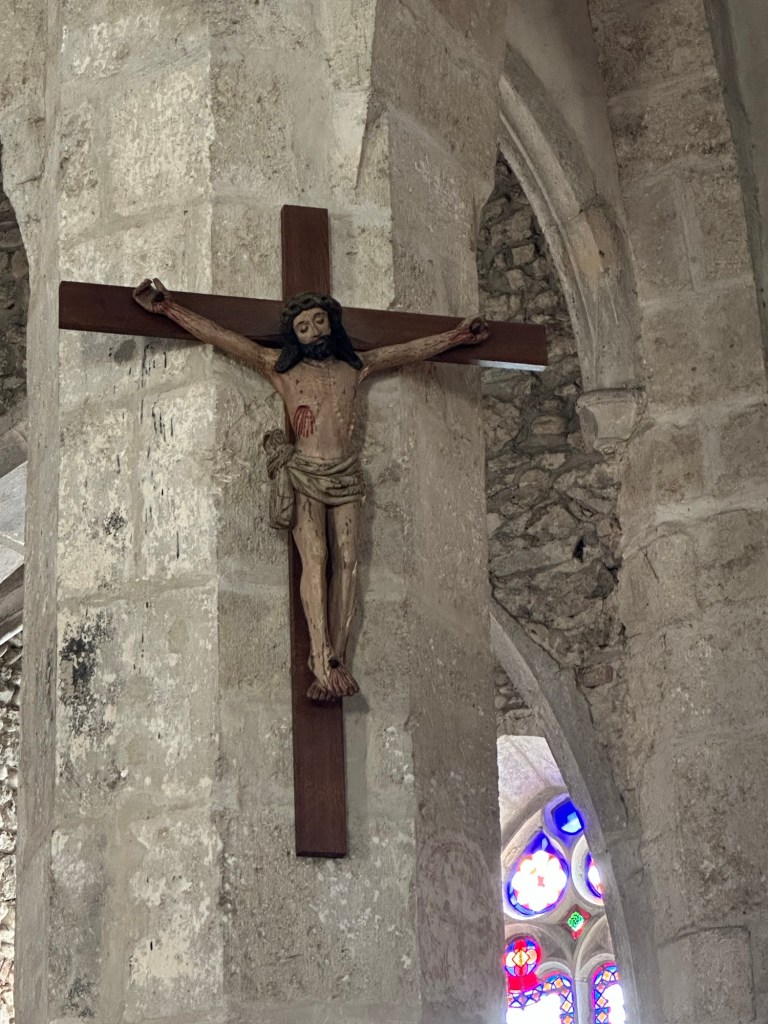
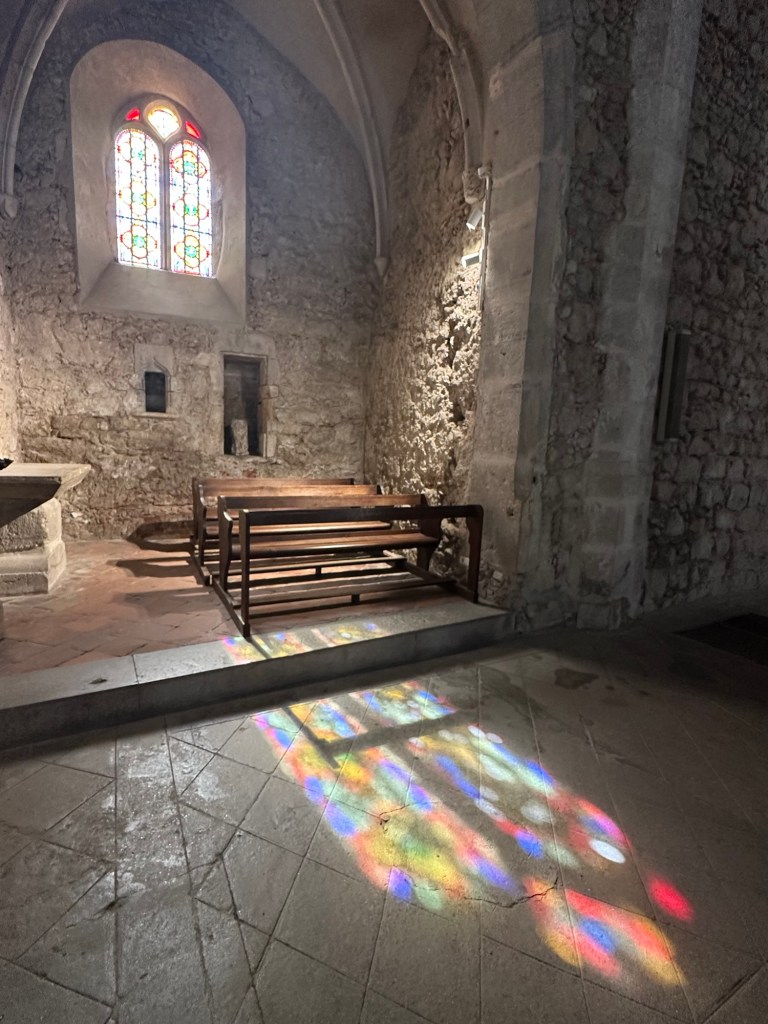
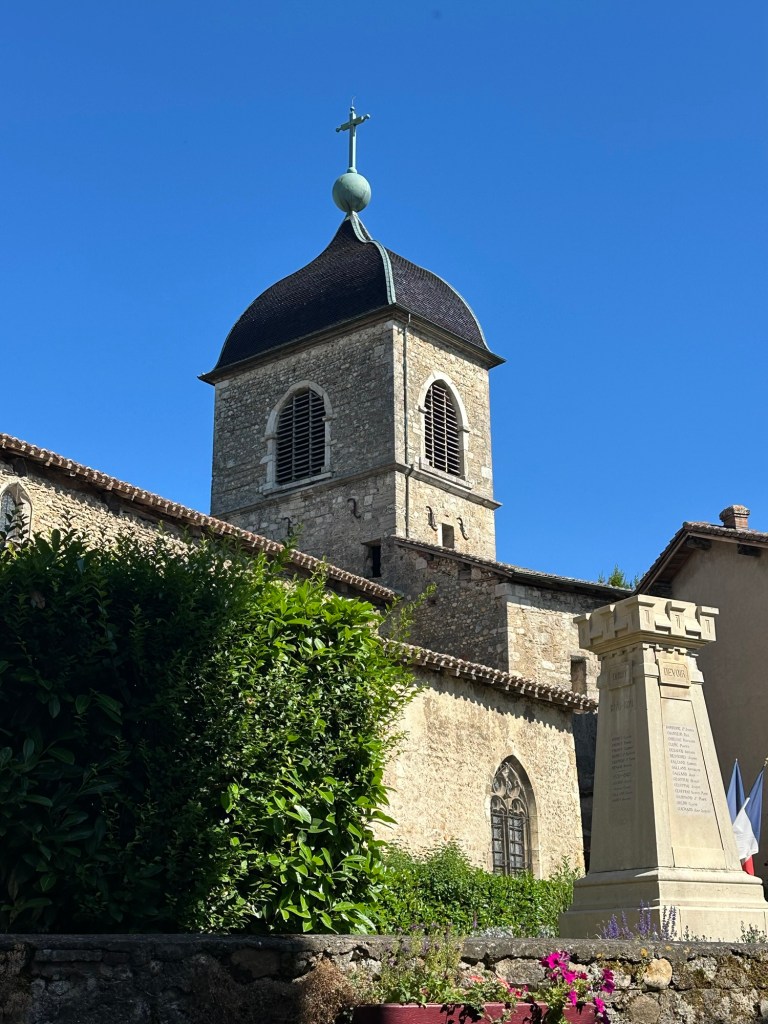
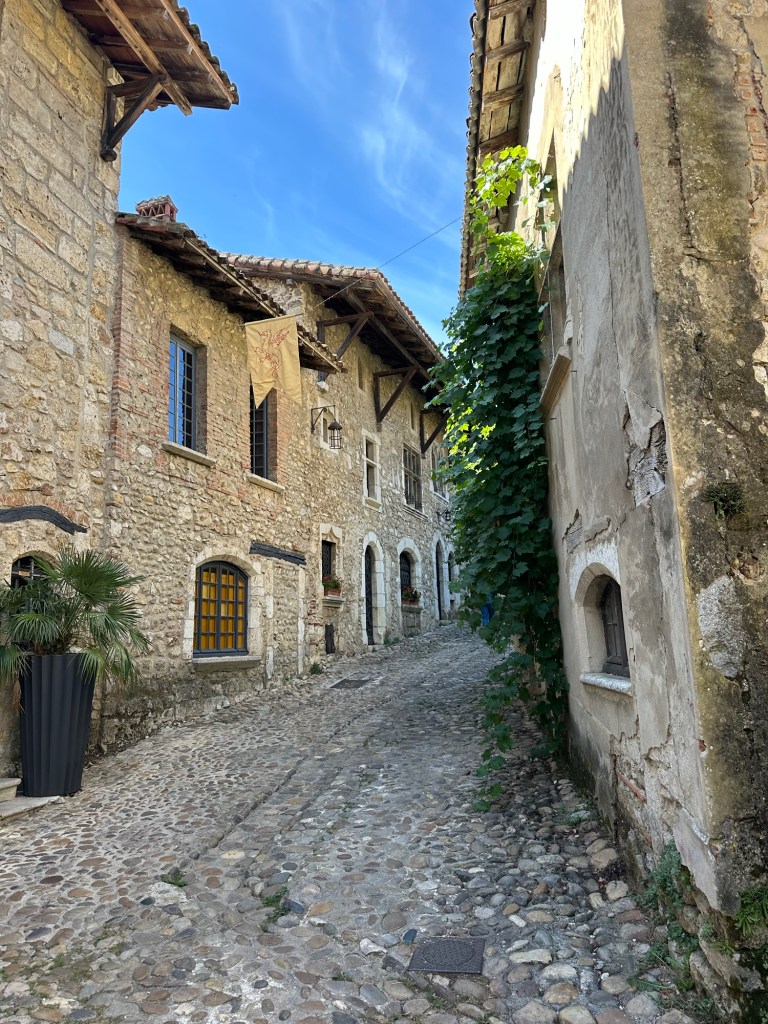
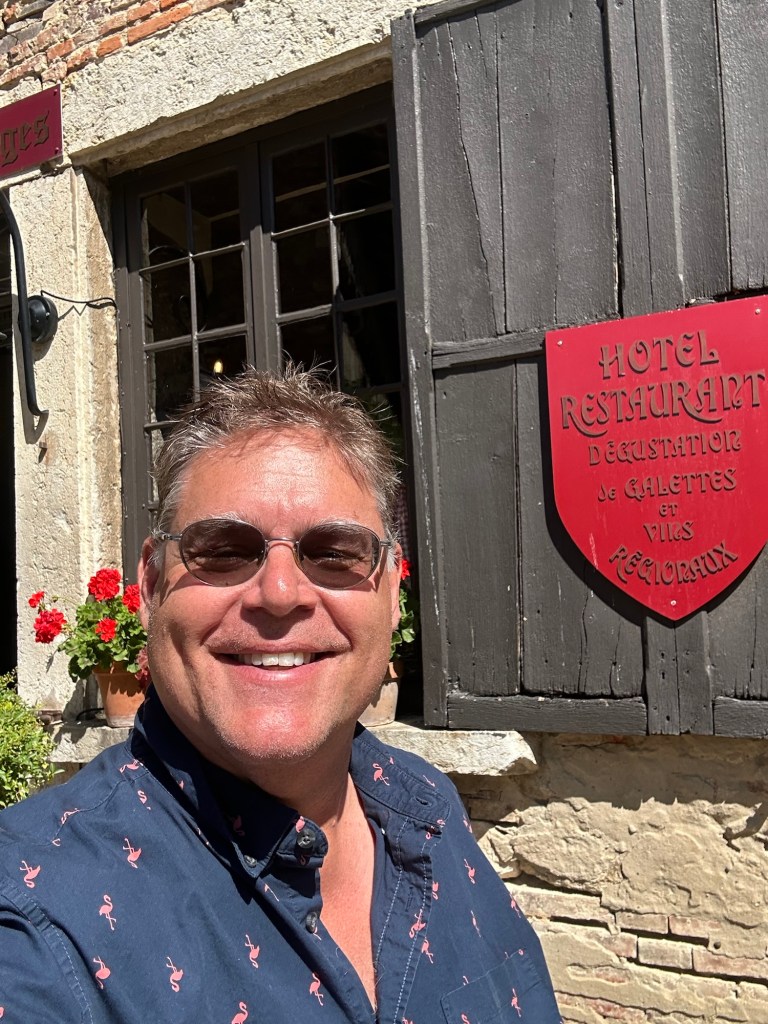
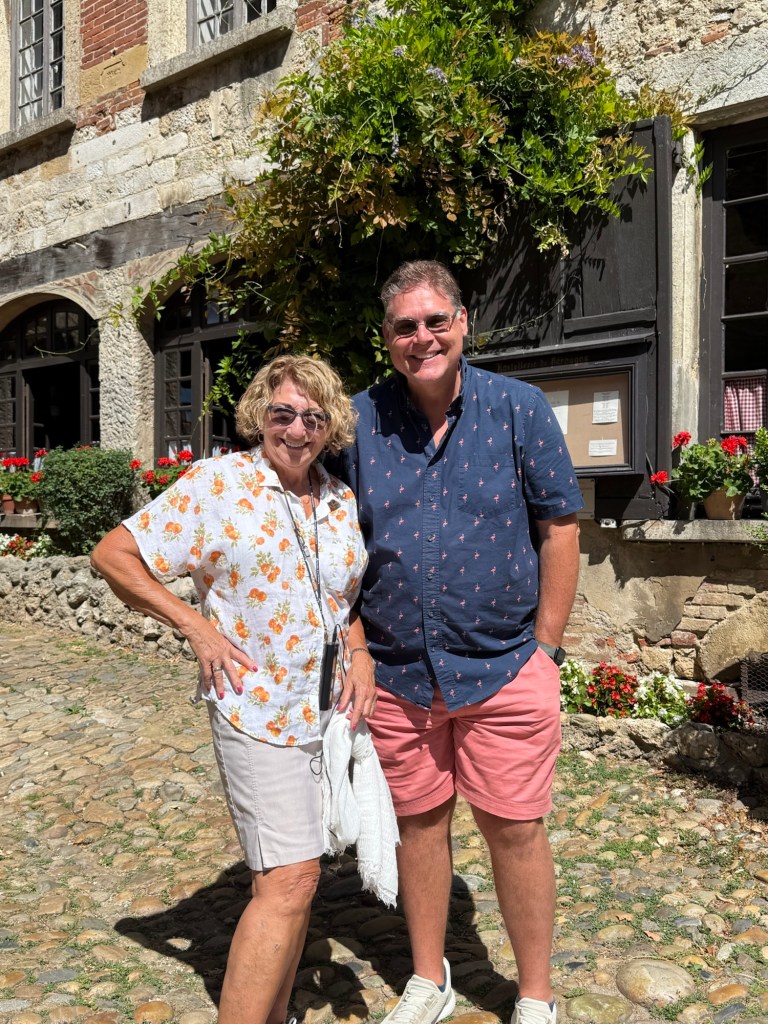
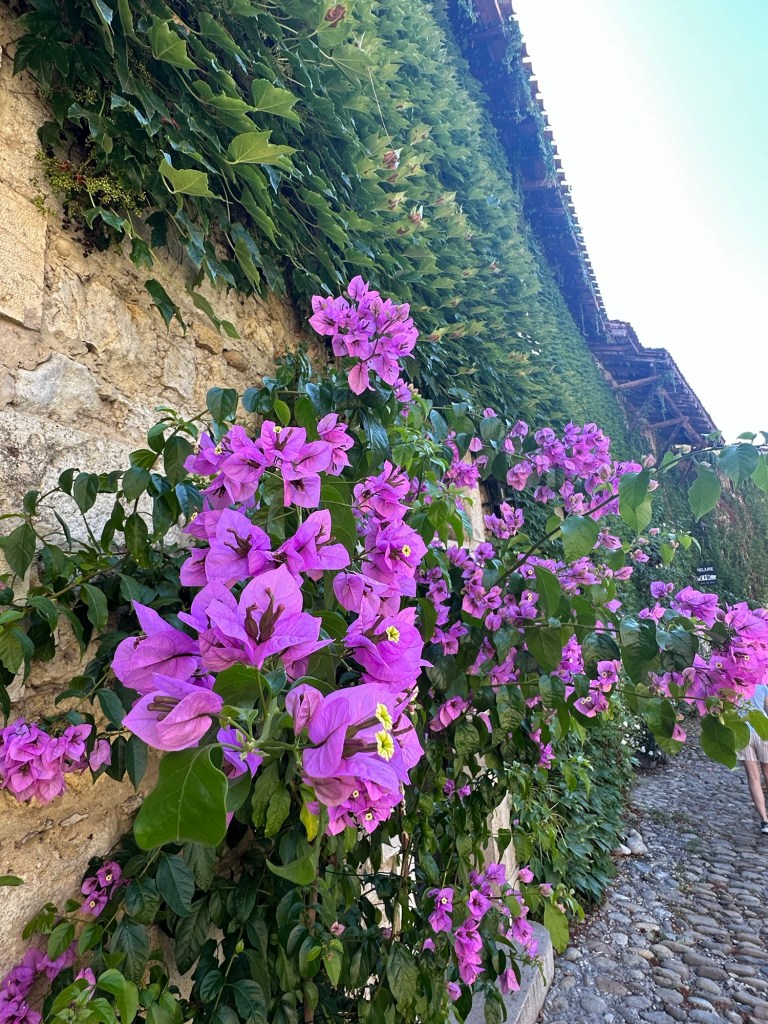
This place is straight out of a fairy tale — one of France’s officially recognized “most beautiful villages,” and it’s easy to see why. Narrow cobblestone streets curve and wind through centuries-old stone buildings. The uneven stones underfoot were tricky to walk on at times, but completely worth it for the atmosphere and charm. Our guide told us that the Church of Sainte-Marie-Madeleine, which still stands proudly today, once served a double purpose: it was not only a church, but also part of the fortified city wall. Its thick stone walls were built to protect the villagers from invaders, and it was both a spiritual and physical refuge during times of trouble.
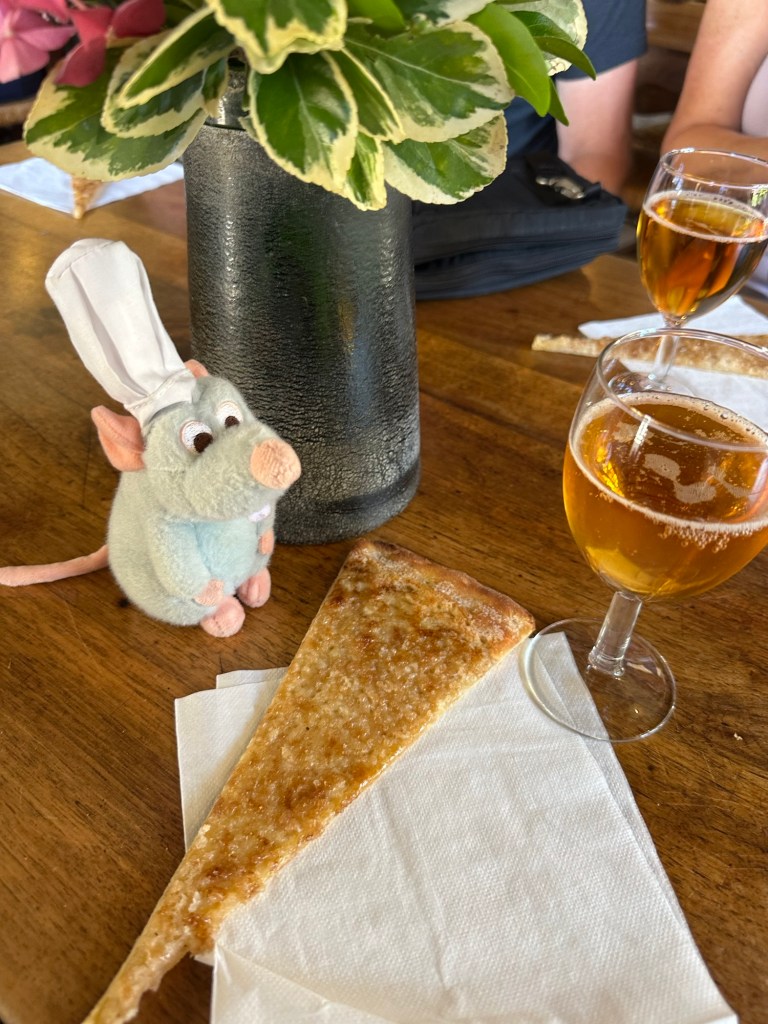
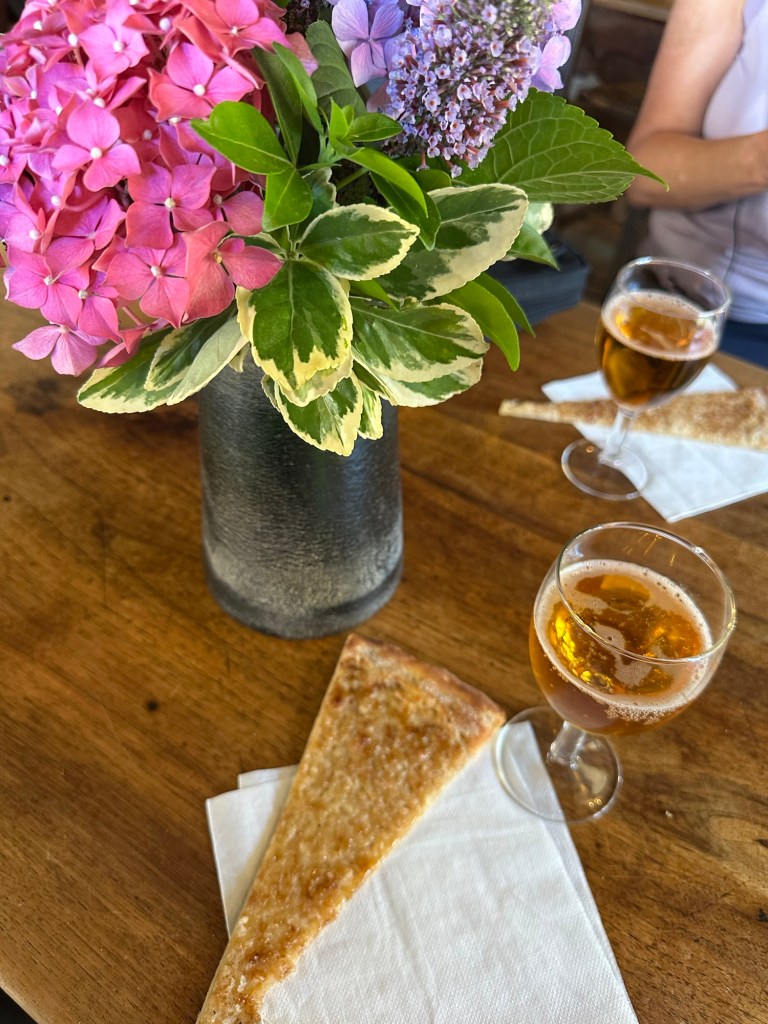
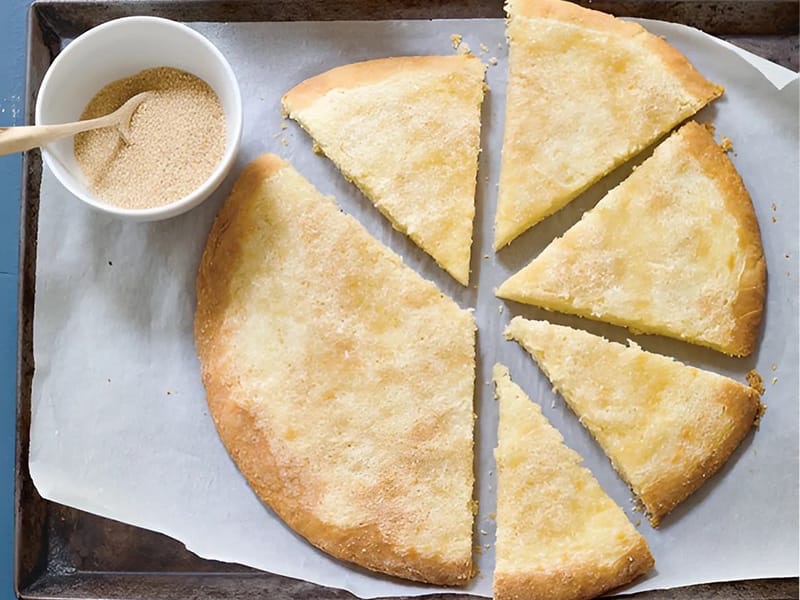
Of course, no visit to Pérouges would be complete without trying the famous galette de Pérouges — a rustic, sugar-sprinkled tart made from a slightly yeasted dough. We enjoyed it warm, with a glass of sparkling apple cider, and I must say… très bon! I’ll be sharing a recipe at the end of this post for those of you who want to bring a little taste of Pérouges into your own kitchen.

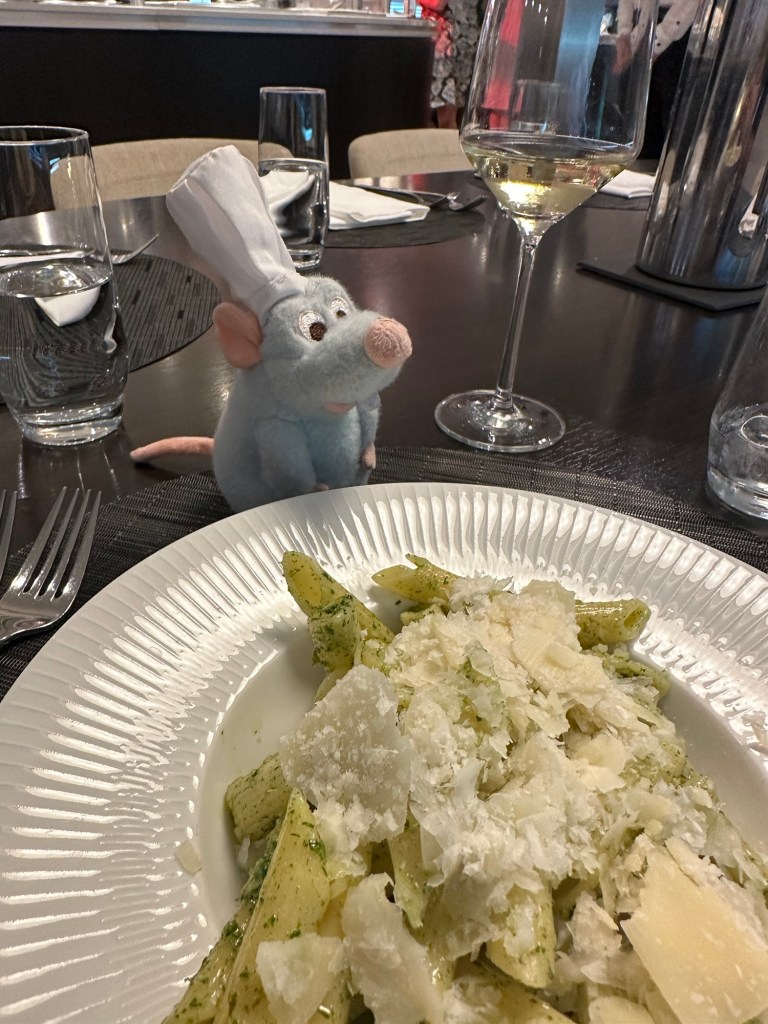
Back onboard, we had just enough time to freshen up and grab lunch. I had a lovely pesto pasta — fresh and simple, and just the right thing after a morning of walking.
And then… I had a moment. While waiting for our afternoon market tour, I suddenly realized I didn’t have my phone. Cue the panic. I had just gotten on the bus when I felt that awful sinking feeling. Thankfully, our cruise director saw the look on my face and told me to go back and check. I raced back to the ship, and there it was — lying under the table in the lounge, right where it must’ve fallen from my pocket. Crisis averted!

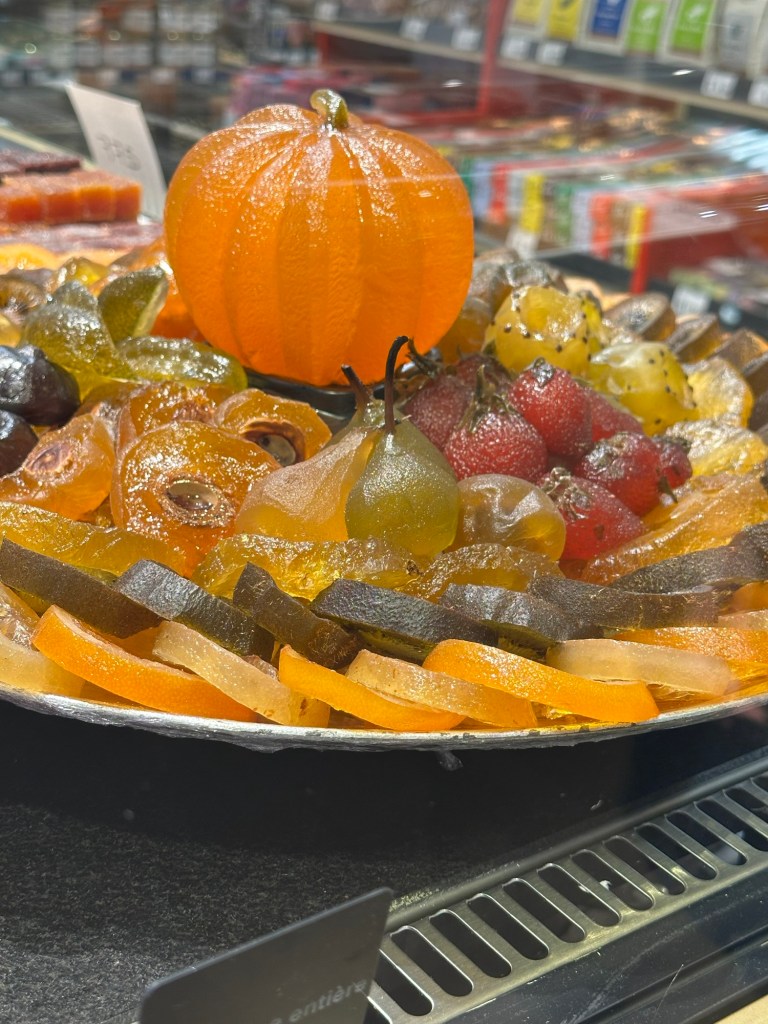
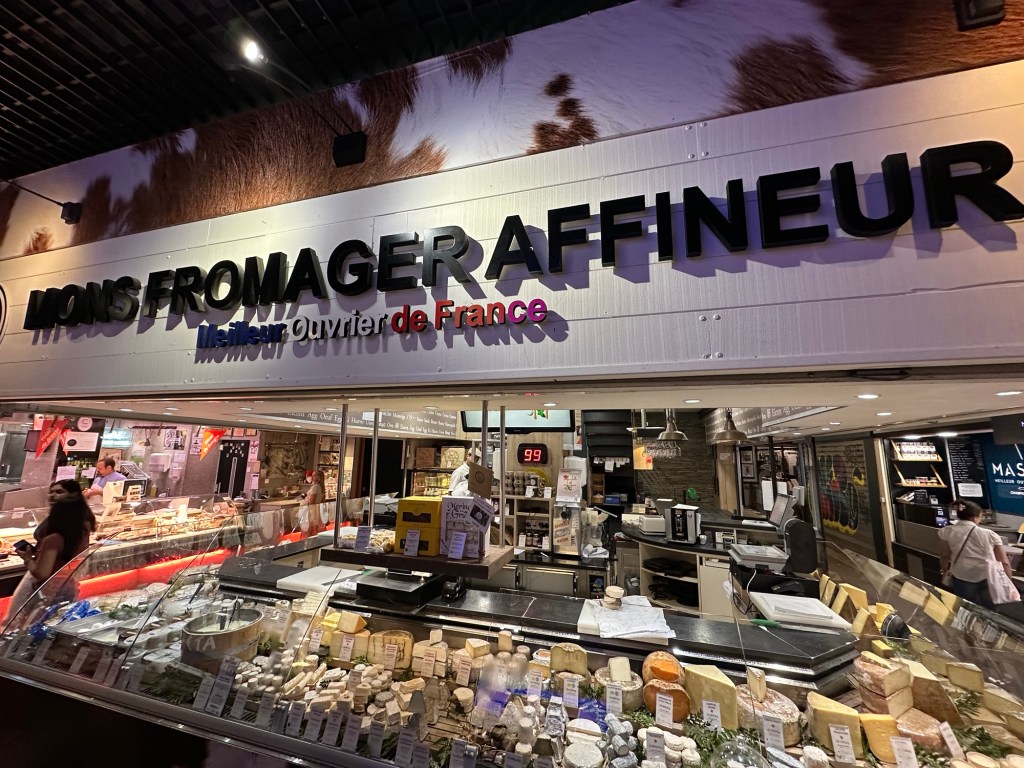
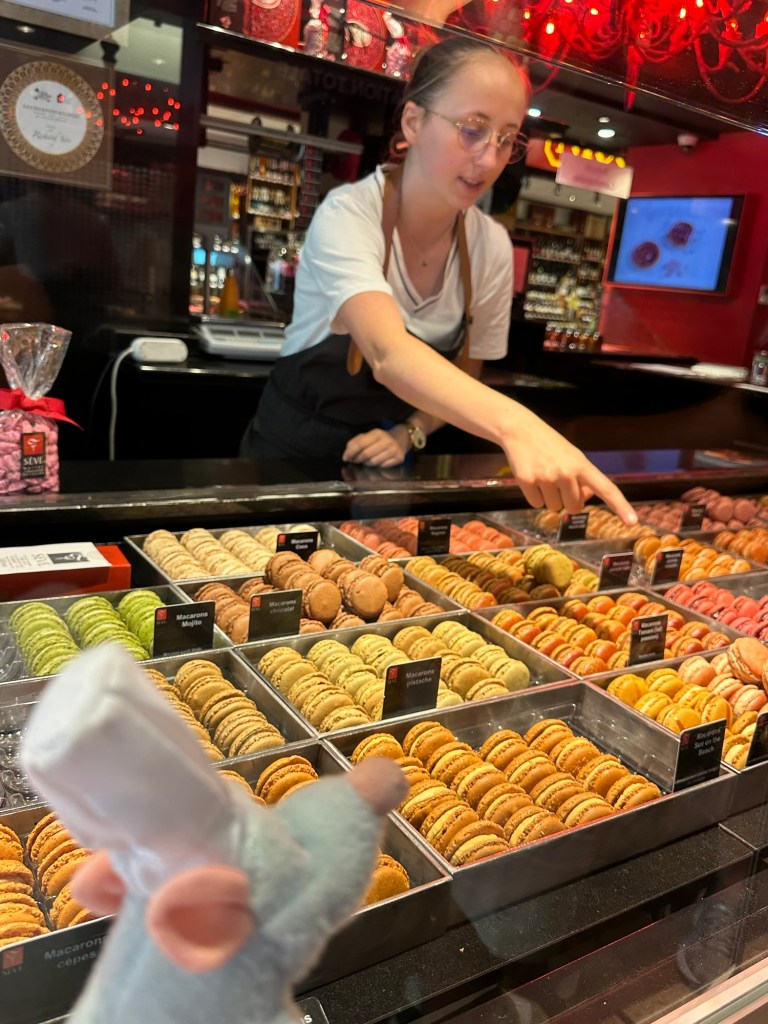
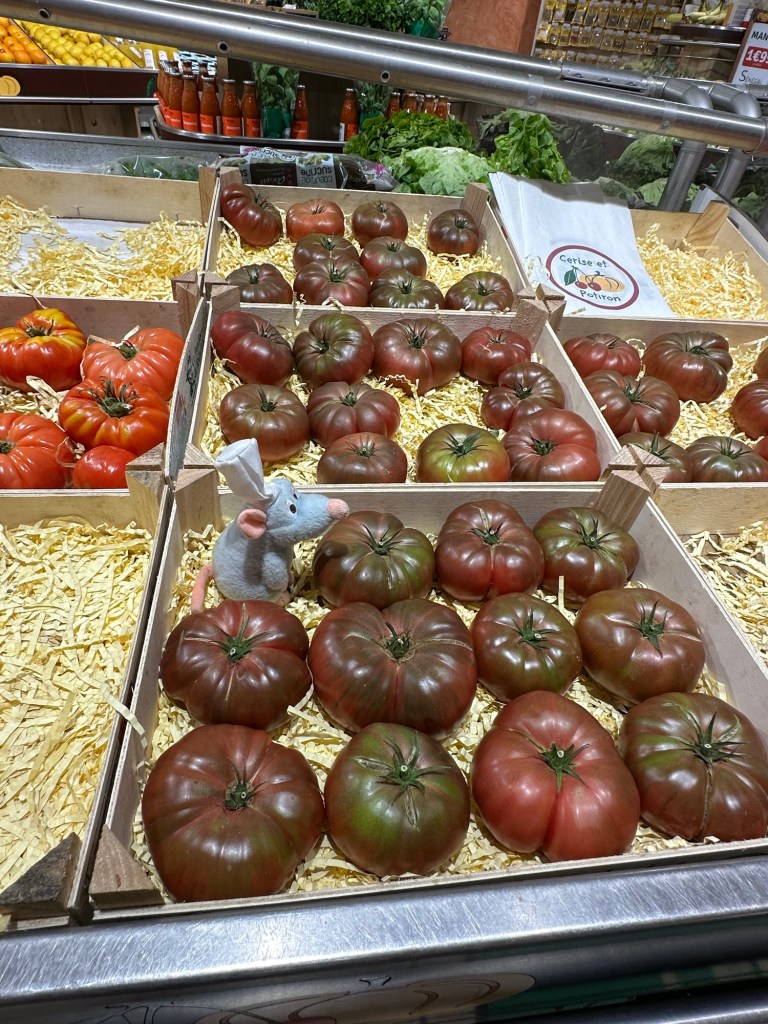
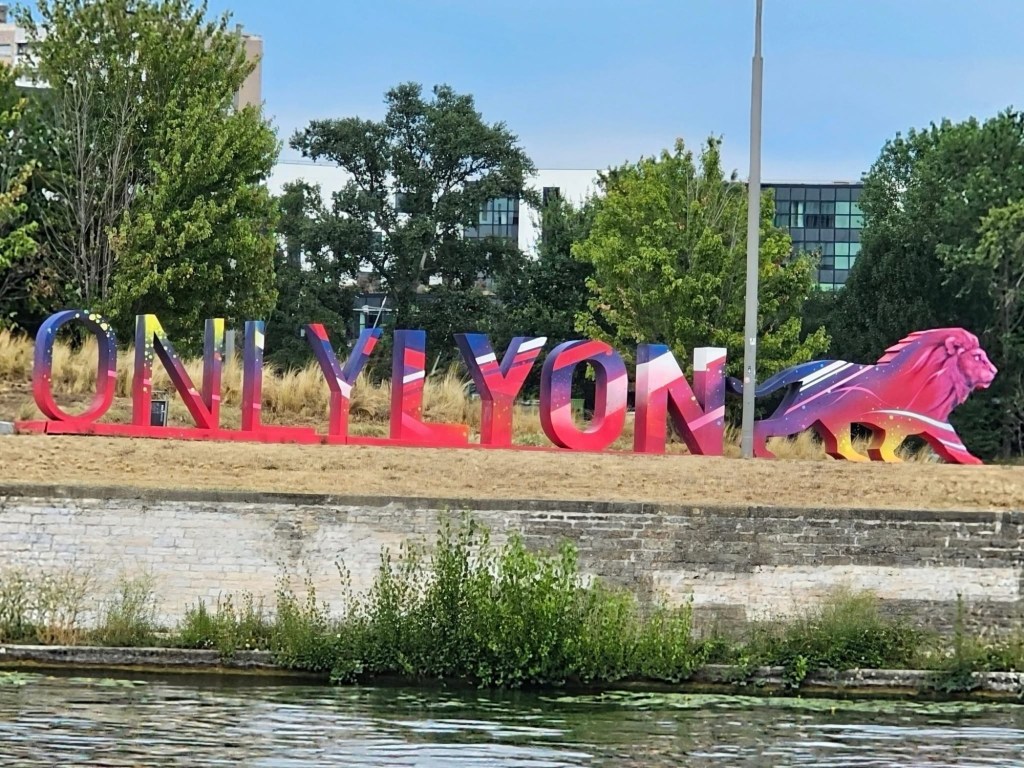
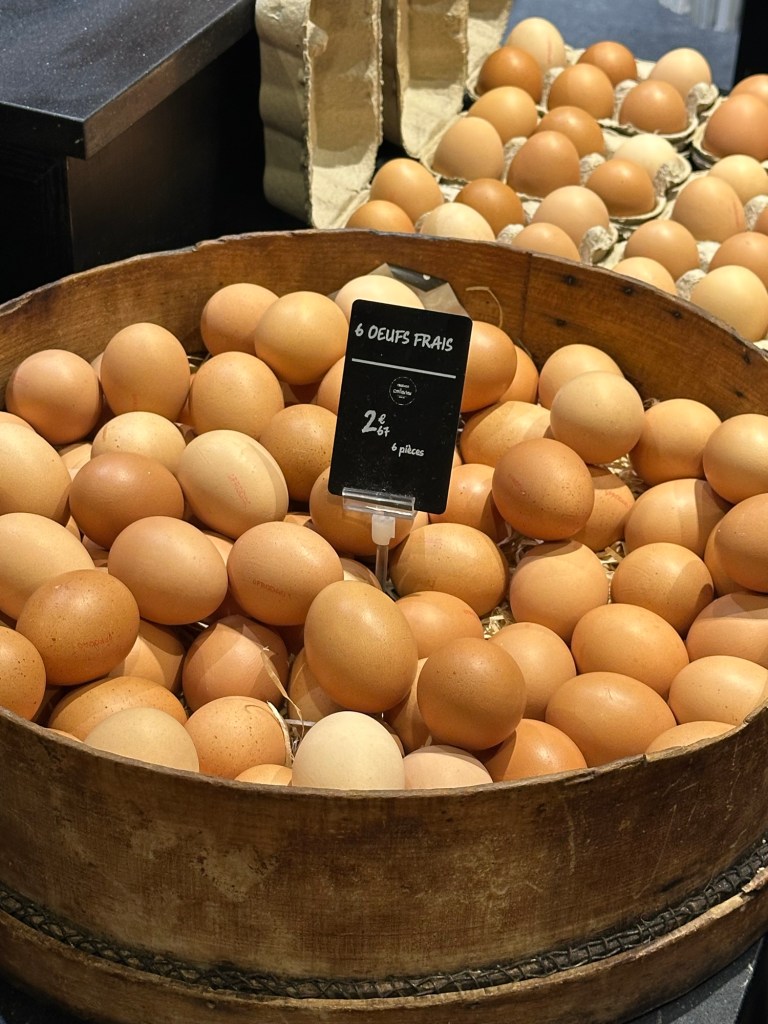
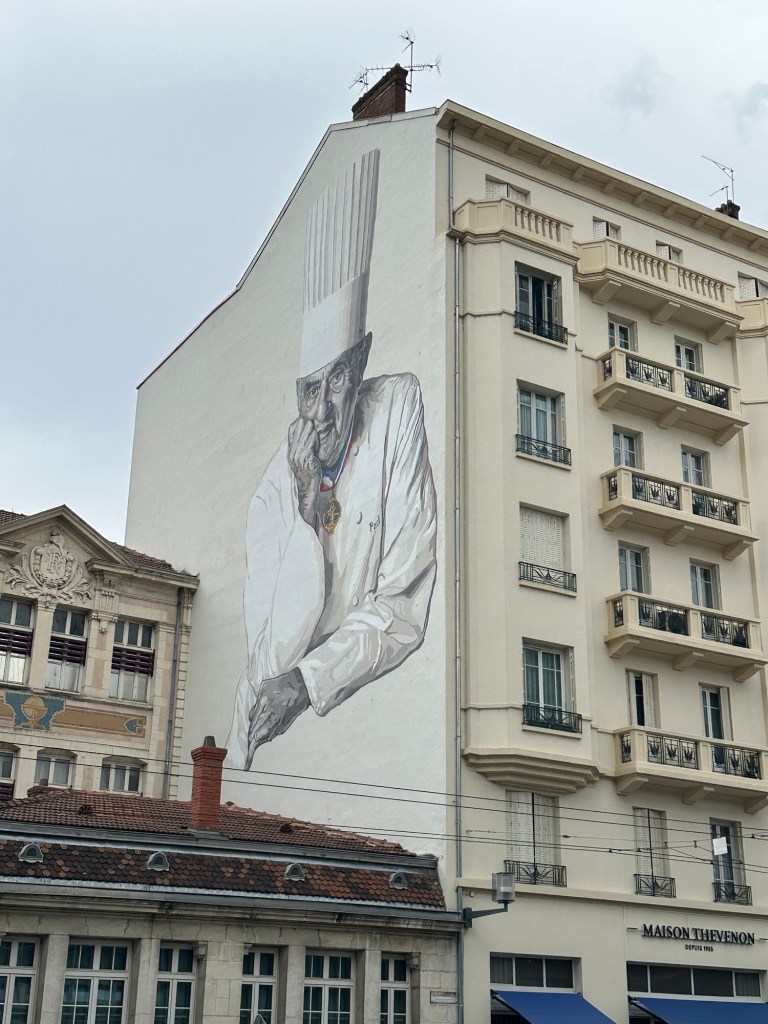
Once my heart rate returned to normal, we were off to Les Halles de Lyon – Paul Bocuse, a world-famous indoor market named after France’s legendary chef. This place is a temple of food. Every aisle was packed with decadent chocolates, elegant pastries, local meats and cheeses, and just about everything that makes Lyon the culinary capital of France.
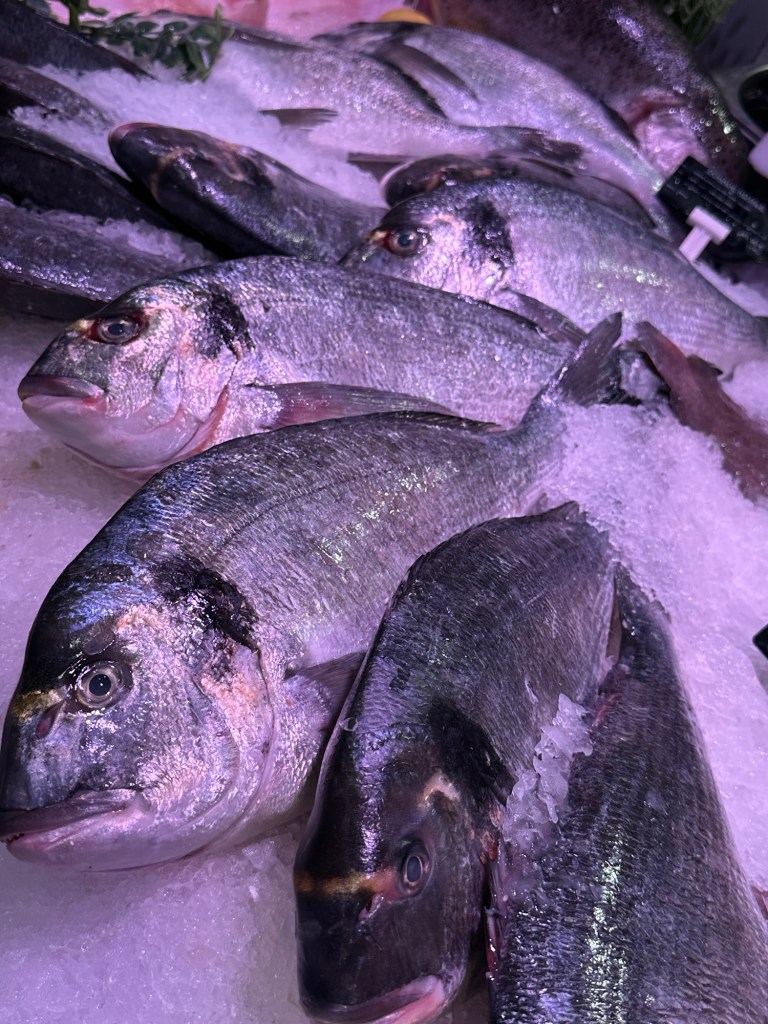
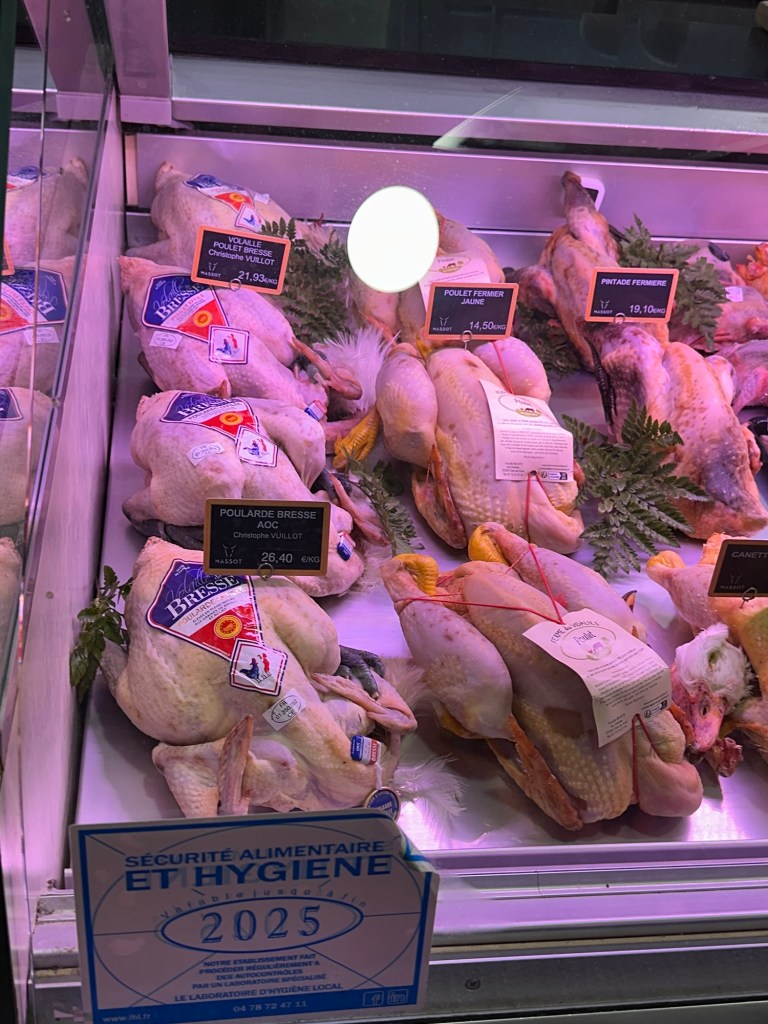
Remember those poulet de Bresse — the fancy chickens with the blue feet we learned about earlier this week? Well, they were on display here too… and going for about $70 per chicken. Let’s just say I took a photo, not a shopping bag.
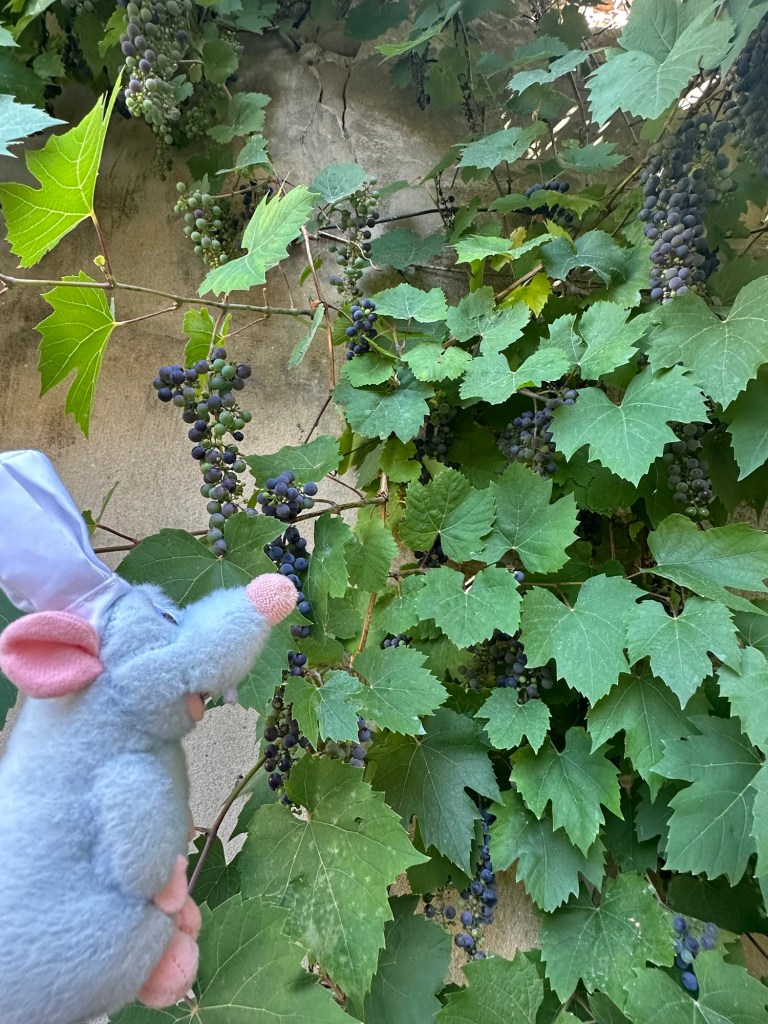
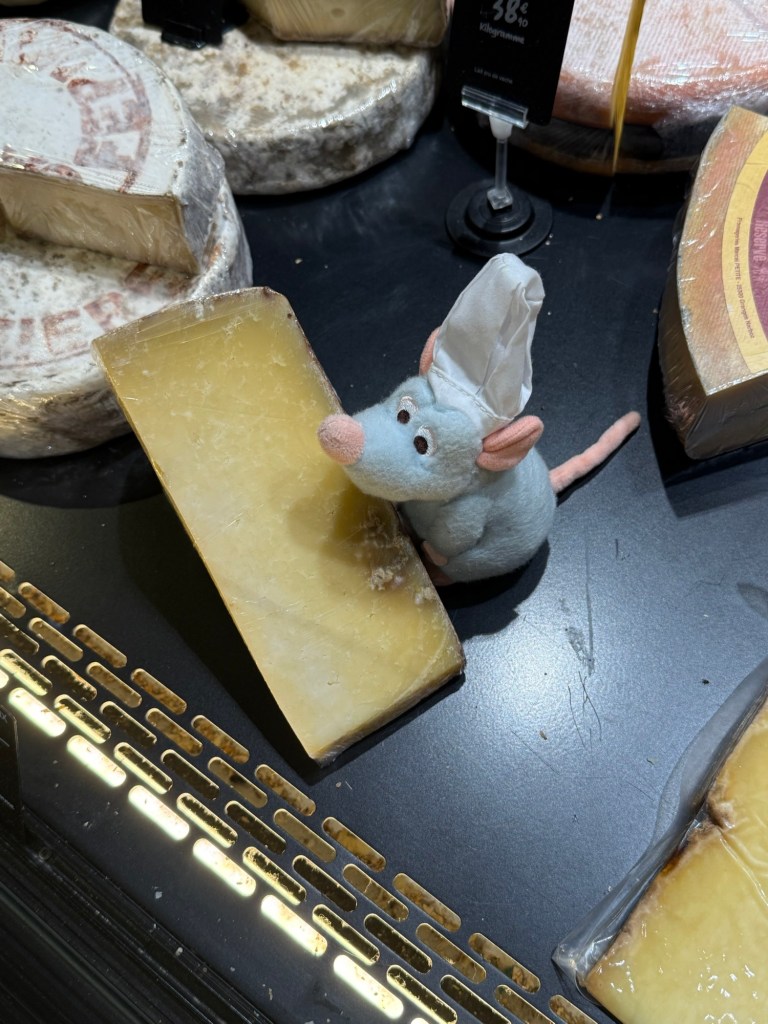
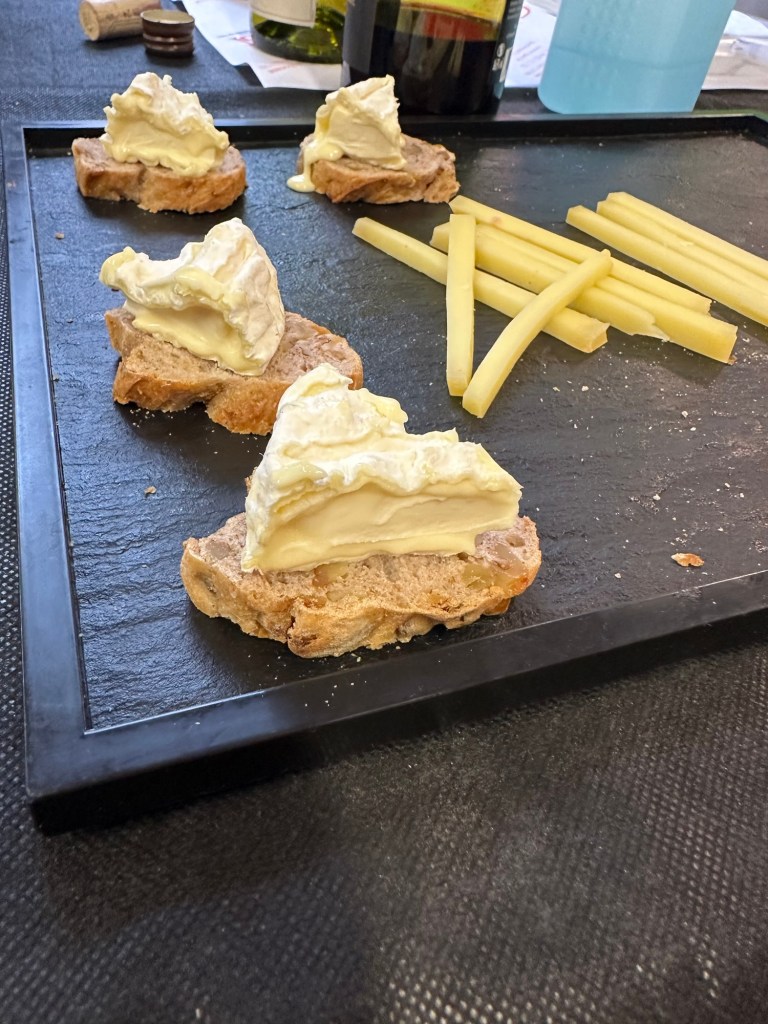
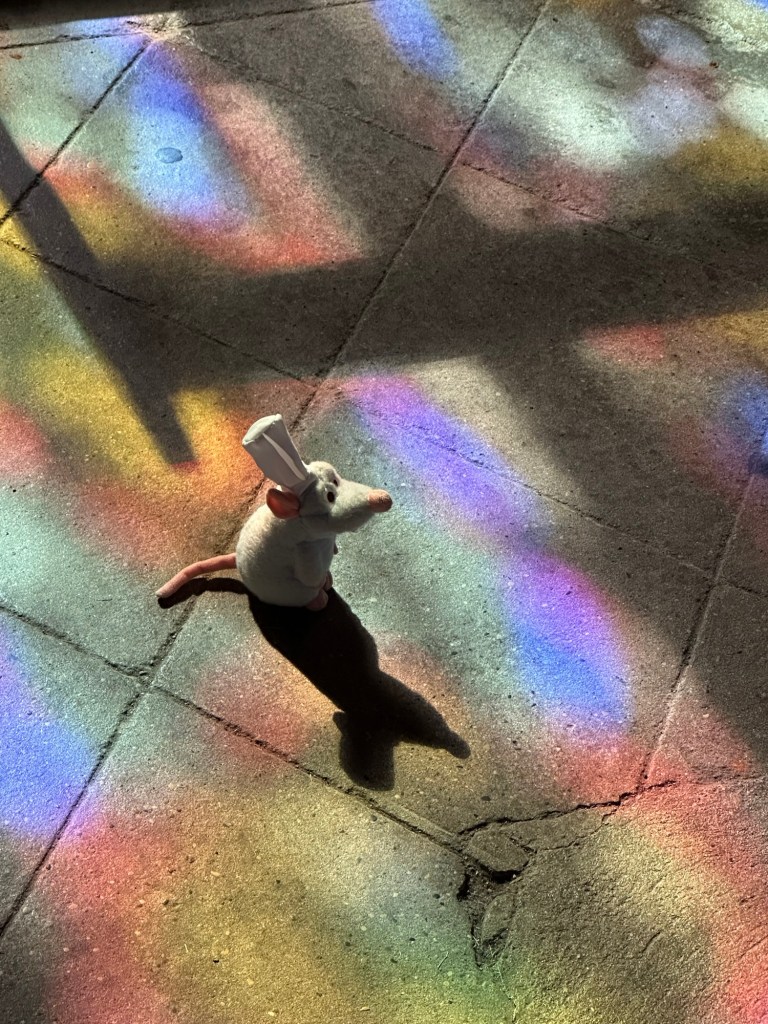
We did some tasting while we walked, and one moment I won’t forget was trying a local cheese. I gave it a go, but… let’s just say it tasted exactly the way feet smell. 😂 I did manage to swallow it, but I’ll let Remy enjoy that one on my behalf.
Another fun thing our guide explained today was the French language’s two words for river:
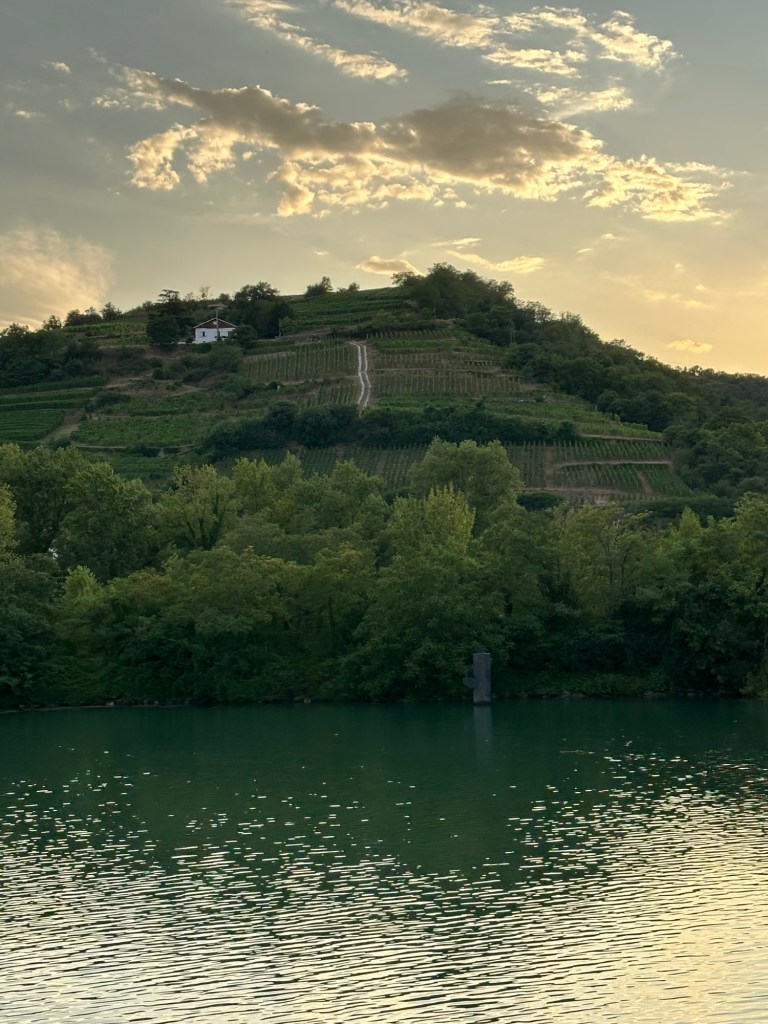
Un fleuve is a river that flows into the sea. Une rivière is a river that flows into another river. The Rhône is a fleuve, and the Saône is a rivière, because the Saône flows into the Rhône. Isn’t that fascinating? Just another little detail that makes you appreciate how much geography and language intertwine.

While driving through Lyon, our guide pointed out something fascinating about French hospitals — many of the older ones were historically called Hôtel-Dieu, which translates to “Hostel of God.” These weren’t just places of medical care; they were charitable institutions, often run by religious orders, offering shelter and treatment to the poor and sick. The Hôtel-Dieu de Lyon is one of the oldest and most significant, dating back to the 12th century. Though it no longer functions as a hospital, the building has been beautifully restored and now houses a museum, shops, and even a luxury hotel — a stunning example of how history is preserved and repurposed here in France.

Dinner tonight was another delicious experience. I started with escargot (a personal favorite), then had the fish as my entrée. It was on the smaller side, but my friend Ginny kindly shared part of her (perfectly cooked) filet mignon — and that more than made up for it! Dessert was a smooth, rich chocolate mousse that felt like a sweet reward after a full day.
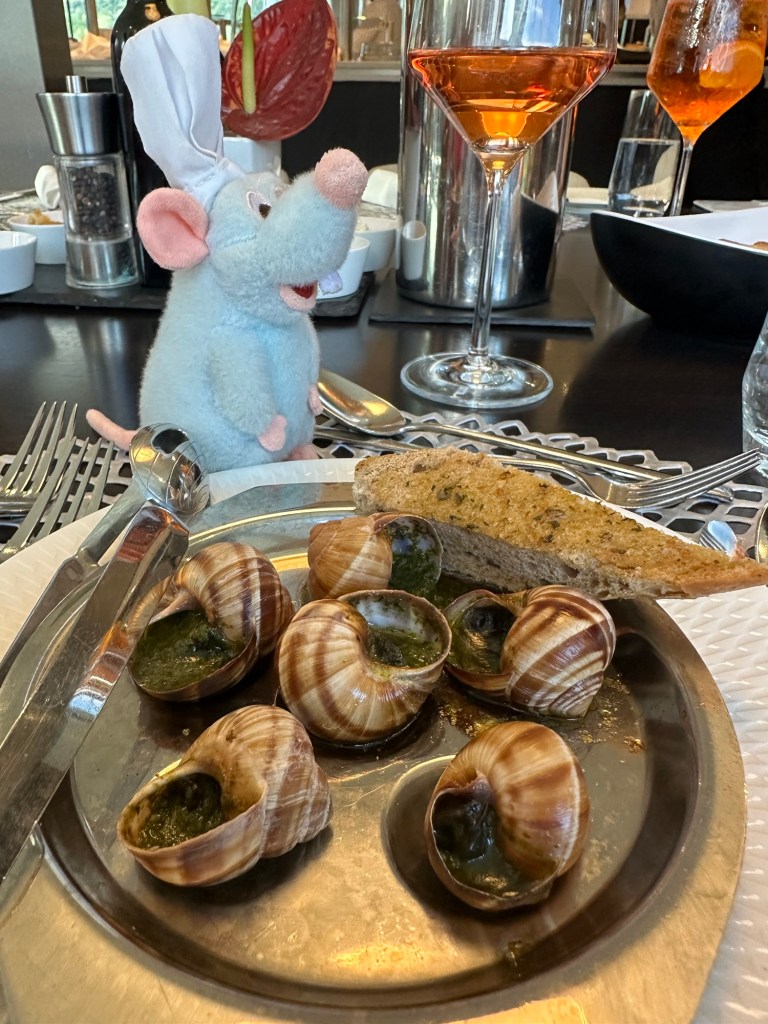
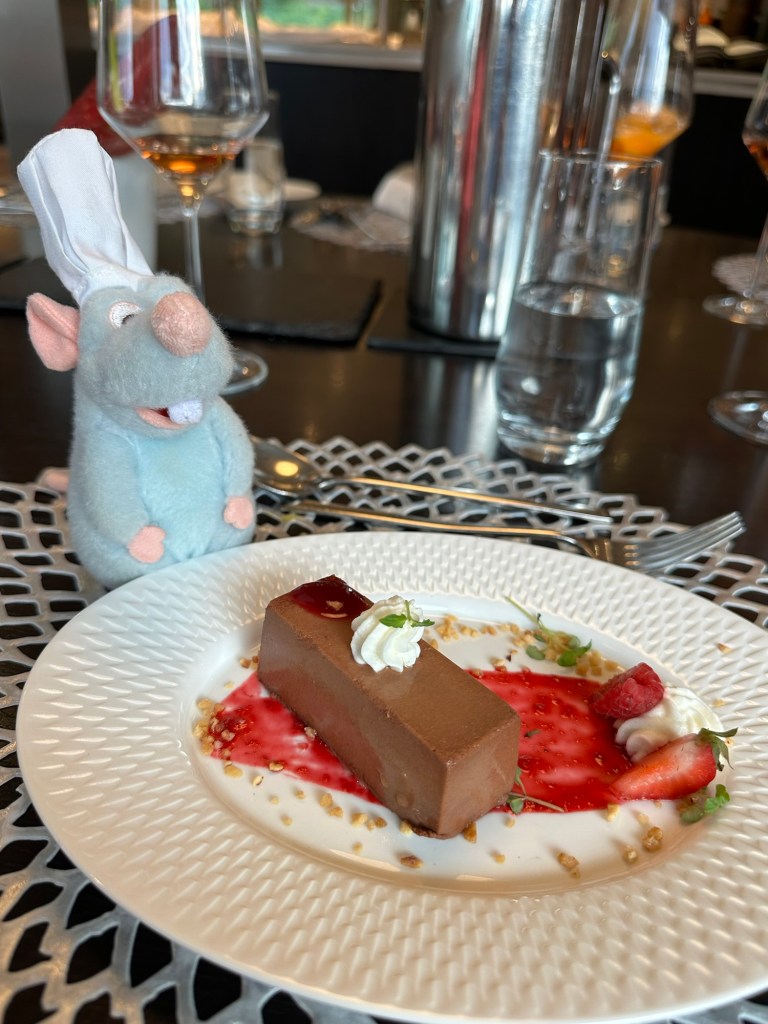
What I love about Avalon is that you’re never stuck with a meal you don’t love. I encouraged a few of my tablemates to try escargot for the first time tonight — and reminded them that if they didn’t like it, our server would bring them something else without hesitation. You can order as much or as little as you like, and they genuinely want you to enjoy every bite.
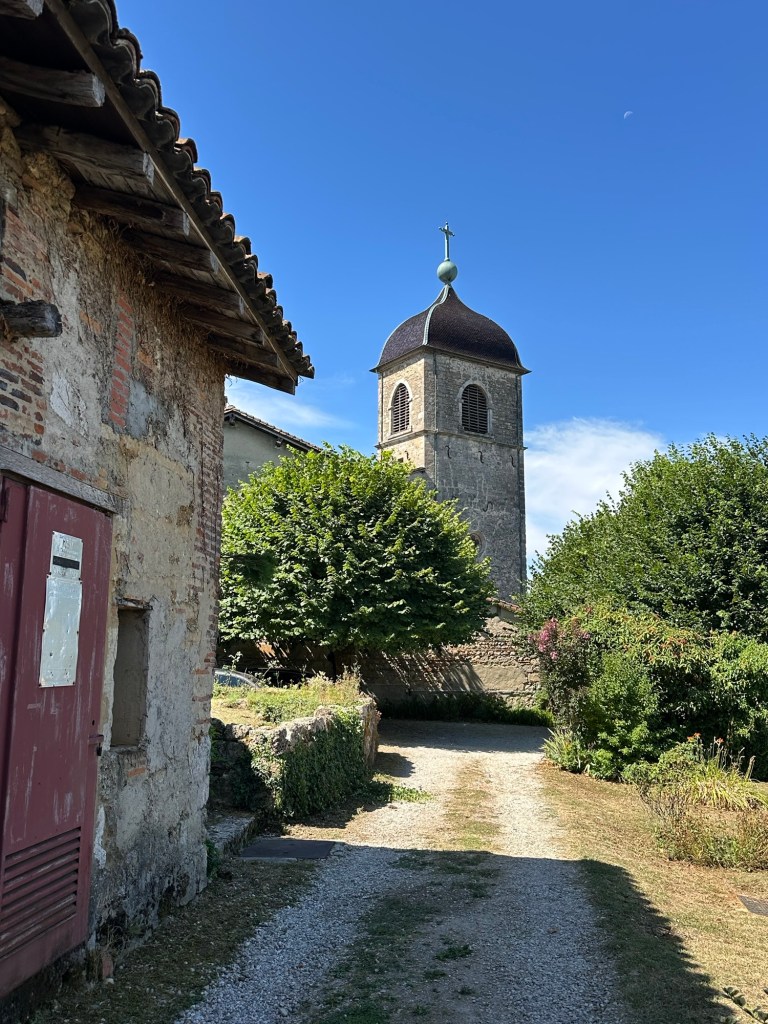
A Bit of History: Pérouges
The medieval town of Pérouges sits high on a hill overlooking the Ain Valley, and its preserved architecture tells stories that date back to the 12th century. It was originally a colony of craftsmen — mostly linen weavers — and its prosperity grew thanks to trade routes between Lyon and Geneva. Its strategic location meant it needed protection, hence the fortified church and thick stone walls. Over time, the town fell into decline but was lovingly restored in the early 20th century. Today it stands as one of France’s most cherished examples of medieval heritage.

Recipe: Galette de Pérouges (Sweet Sugar Tart)
Ingredients:
2 cups all-purpose flour 2¼ tsp active dry yeast ½ cup warm milk 1 egg 3 tbsp sugar (plus extra for topping) Pinch of salt 3 tbsp softened butter (plus extra for topping) Zest of 1 lemon (optional)
Instructions:
Dissolve yeast in warm milk and let sit 5–10 minutes until foamy. Mix in flour, egg, sugar, salt, and lemon zest (if using). Knead until smooth, then let rise 1 hour. Roll out dough into a round tart shape and place on parchment-lined baking sheet. Let rest 20 minutes. Press your fingertips into the dough to create dimples. Dot with butter and sprinkle generously with sugar. Bake at 375°F (190°C) for 20–25 minutes until golden. Serve warm!
This day was full of texture — from the rough cobblestones of Pérouges to the creamy indulgence of Lyon’s culinary scene. And even though I had a little moment of panic with my phone, it all worked out in the end. That’s one of the things I’ve come to love about travel: the surprises, the stories, and those unexpected moments that turn into memories.
After dinner, I slipped back to my room to work on this blog post and get some photos uploaded — even though I was invited (okay, begged!) by my new friends to join their trivia team tonight. They were hoping for a victory, and I hated to miss out on the fun, but I knew I needed a quiet evening to catch up and recharge. Sometimes, after a full day of exploring and tasting and learning, the best thing you can do is put your feet up, reflect, and call it a night. That’s exactly what I’m doing now. Bonne nuit, friends — more adventures await tomorrow!
Thanks for following along. Tomorrow is another day — and another adventure!


 Cleared For Take-Off!