
Tahiti in the Limelight:
A Journey Through Popular Culture
With its idyllic landscapes and rich cultural tapestry, Tahiti has long captivated the imagination of filmmakers, writers, and artists. From Hollywood epics and literary masterpieces to surf culture documentaries and the rise of tattooing, the allure of these islands has permeated popular culture from the 1930s to the present.
TAHITI IN FILM
The Golden Age of Hollywood
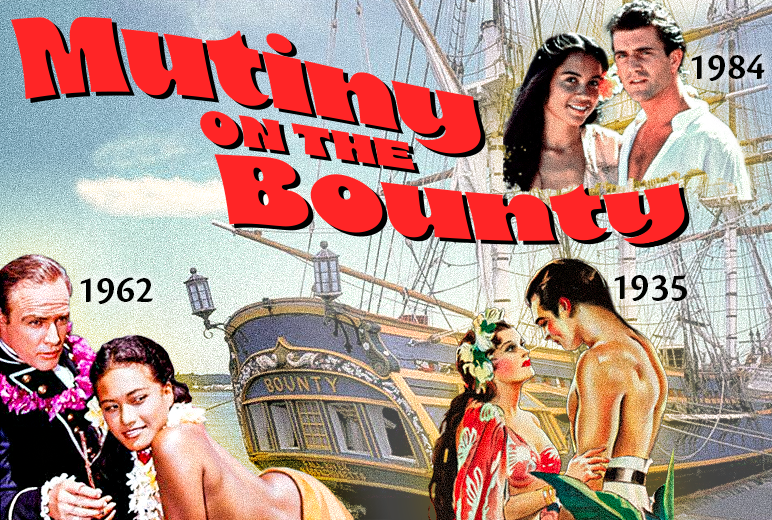
One of the earliest movies in Tahiti’s cinematic treasure trove is the 1935 Oscar-winning classic Mutiny on the Bounty, featuring Clark Gable as Fletcher Christian. Although much of the film was shot on California’s Santa Catalina Island, it set the stage for Tahiti’s allure in Hollywood. This movie’s portrayal of the island’s beauty and mystique made it an instant classic.
In 1962, Marlon Brando took on the role of Fletcher Christian in another adaptation of Mutiny on the Bounty. This version, famously shot on location in Tahiti, boasted opening credits with the declaration: “The Greatest Adventure Ever Lived… Becomes the Greatest Movie Ever Made.” Brando’s involvement with Tahiti went beyond the screen as he fell in love with the island, later purchasing his own atoll, Tetiaroa.
Modern Adaptations and Thrillers
The 1984 film The Bounty starred Mel Gibson and Anthony Hopkins, bringing a contemporary twist to the enduring tale of mutiny and adventure with Tahiti taking its own starring role. And husband and wife Warren Beatty and Annette Bening shot much of 1994’s Love Affair on Tahiti and Moorea. French cinema has also embraced Tahiti with thrillers like Meurtre à Tahiti and L’ordre et le morale, which delve into the darker, more complex aspects of life on the islands. In 2022, Pacification starring Benoît Magimel won acclaim for its stunning cinematography and compelling storytelling, garnering awards for Best Actor and Best Cinematography at the Cannes Film Festival.
Surf Culture and Documentaries
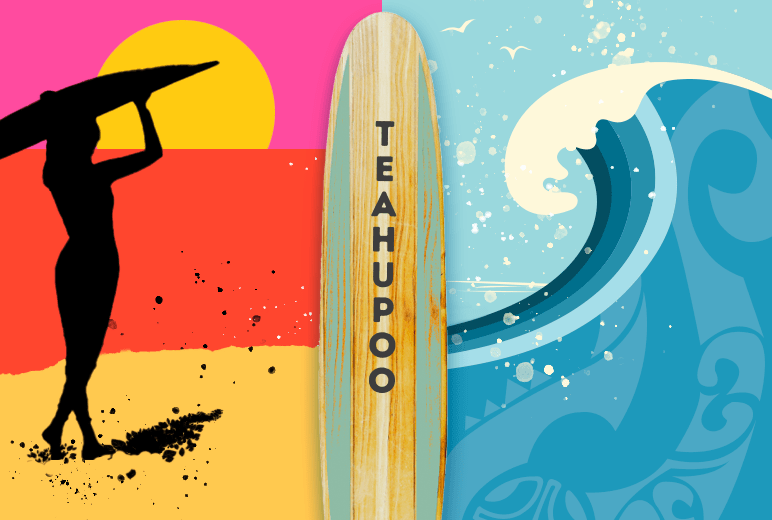
Tahiti’s legendary waves have made it a mecca for surfers, immortalized in classic documentaries like The Endless Summer (1966) by Bruce Brown, which is often hailed as the crown jewel of surfing films. Other notable mentions include Riding Giants (2004) and Step Into Liquid (2003), both of which celebrate the exhilarating surf culture. With the 2024 Olympics set to feature surfing in Tahiti, the island’s world-renowned waves will once again take center stage, highlighting their unique and challenging nature.
An Animated Favorite
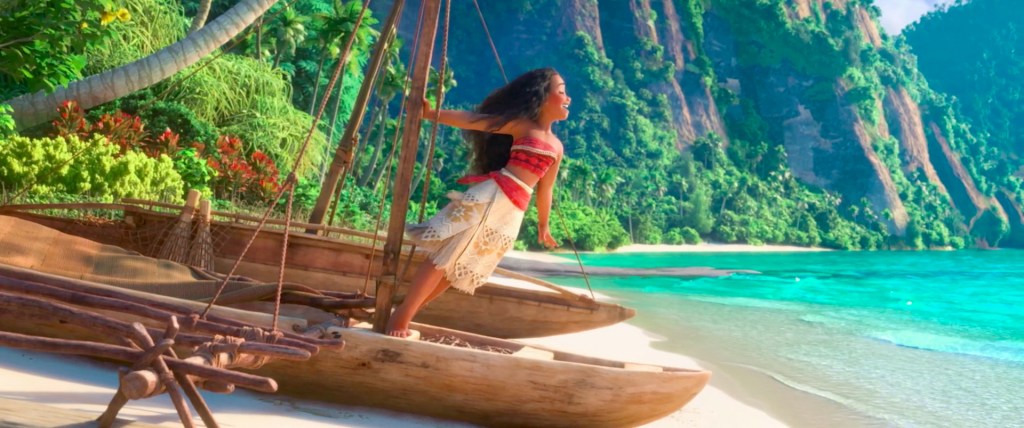
More recent films include a little animated picture from Disney (read: huge blockbuster!) called Moana. Released in 2016, the movie draws inspiration from ancient Polynesian culture, incorporating elements of mythology, navigation, and societal values. Audiences from the young to the young-at-heart can look forward to Moana 2, set for a November release this year, and a live-action remake expected in July 2026.
LITERARY REFLECTIONS
Tahiti’s literary legacy is just as rich as its cinematic one. Charles Nordhoff and James Norman Hall’s Mutiny on the Bounty remains a cornerstone, as evidenced by the myriad films depicting the dramatic events that unfolded in these tropical waters.
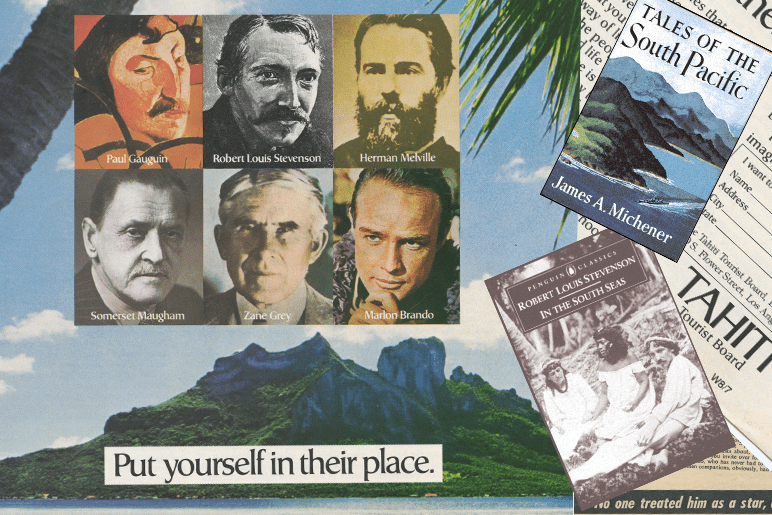
James A. Michener’s Tales of the South Pacific, inspired by his time as a U.S. Naval historian in the South Pacific, presents a vivid picture of life on the islands during World War II. The work famously inspired the Rodgers and Hammerstein musical South Pacific and its subsequent film adaptation. Michener’s Return to Paradise (1951) offers a more reflective view, exploring post-war island life before the “Jet Age” brought the onset of mass tourism in the early 1960s.
Herman Melville’s early works, Typee (1846) and Omoo (1847), draw from his experiences in the South Seas, providing a raw and adventurous look at the islands. Robert Louis Stevenson (In the South Seas), W. Somerset Maugham (The Moon and Sixpence), Jack London (The Cruise of the Snark), and Zane Grey (Tales of Tahitian Waters) also penned evocative tales set in Tahiti, each capturing its unique spirit and charm. French naval officer Julien Viaud, under the pen name Pierre Loti, wrote The Marriage of Loti (1880), a poignant tale of lost love that remains a classic.
ARTISTIC INSPIRATIONS
No discussion of Tahiti in popular culture would be complete without mentioning Paul Gauguin. The French artist’s vibrant, evocative works have immortalized the island’s landscapes and people, with his masterpieces displayed in galleries worldwide. Gauguin’s art also serves as a gateway to explore the broader artistic traditions of Tahiti, particularly the intricate and meaningful tattoo culture. Tattoos in Tahiti are not just body art; they are deeply rooted in the island’s history and identity, a tradition that continues to influence global tattoo culture today.
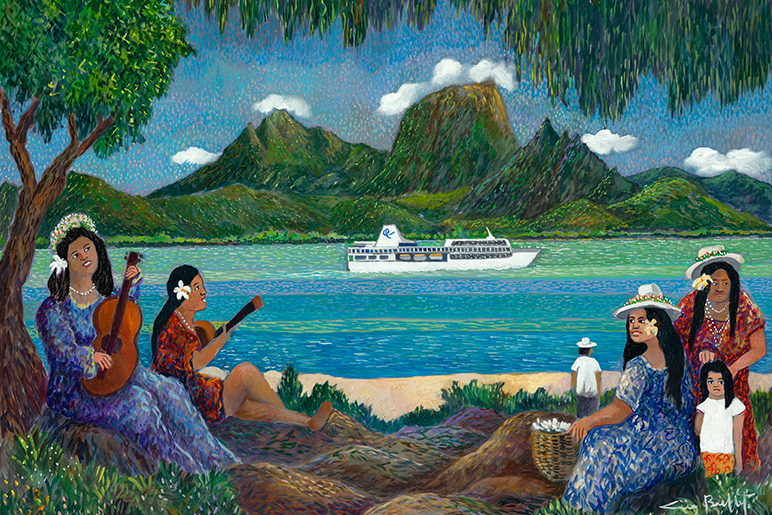
Today, Tahiti remains an enduring muse—not only in artistic popular culture, but as an inspiring destination for travelers as well. Built specifically for these waters, the m/s Paul Gauguin is a dreamy extension of the islands and atolls found here, hosting a mere 330 guests on journeys of artfully authentic discovery designed with the comforts of all-inclusive luxury. Join us and let your inner artist paint memories of a lifetime.
Book your voyage now and start exploring the captivating magic of Tahiti, a paradise so enchanting its magical beauty is preserved in celluloid and written word, impressionist paintings and body art… yet still best experienced in person.
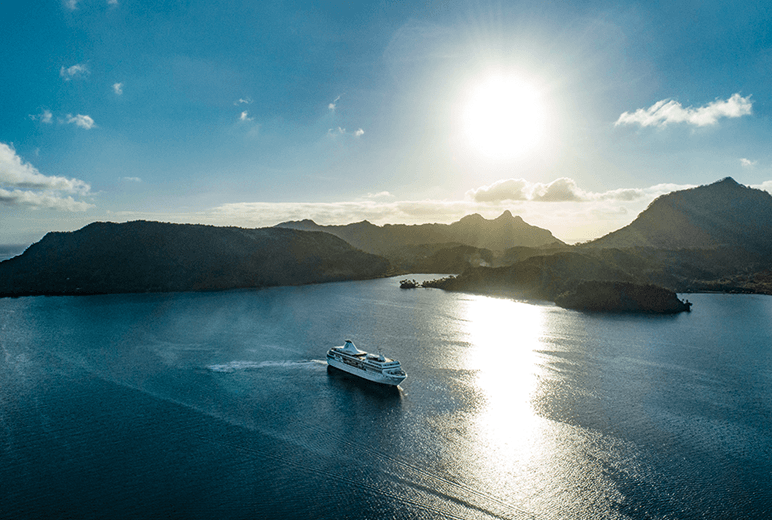
I hope you enjoyed this brief history of pop culture of Tahiti, from Paul Gauguin Cruises, which operates the award-winning luxury small-ship the
m/s Paul Gauguin, providing an exceptional cruise experience. Discover the difference of cruising with purpose and allow us to introduce you to authentic Polynesia. Give me a shout if you would like additional information about cruising in Tahiti, or check out this other article in my travel blog.


 Cleared For Take-Off!